Before Dr. Mary McLeod Bethune's cane could leave Daytona Beach, every movement had to be deliberate. Wearing gloves, two visiting museum curators examined the curved wooden artifact, recorded its condition and layered it in protective material. They then lowered the wrapped cane into a rigid shipping tube built to carry it safely to Chicago.
That careful work, completed during a February visit to Bethune-Cookman University, prepared one of the University's historic objects for a new national chapter. The cane Bethune used in her later years is now part of an exhibition at the Barack Obama Presidential Center highlighting historically Black colleges and universities and the broader civil rights movement.
The Center opened to the public on June 19. B-CU's internal exhibition draft and external coverage indicate that the cane is expected to remain on display through 2028 before returning to the Daytona Beach campus.
One object now connects Dr. Bethune's daily life in Daytona Beach with a national story of education, civic leadership and Black institutional achievement.
A personal object with public meaning
Historic photographs show Bethune with a cane at public gatherings and in quiet portraits. The object is practical, but it also makes history immediate. It reminds viewers that the educator, organizer and presidential adviser remembered through monuments and institutions moved through the world as a person — working, traveling and leading well into her later years.
Bethune founded the Daytona Educational and Industrial Training School for Negro Girls in 1904, the institution that became Bethune-Cookman University. Her influence expanded far beyond campus. She advised President Franklin D. Roosevelt, organized Black women's leadership nationally and pressed the federal government to widen opportunity for African Americans.
At the Obama Presidential Center, the cane helps tell that larger story through an object that remained close to its owner. Its presence also places B-CU within a national account of HBCUs as institutions that created opportunity, developed leaders and preserved essential chapters of American history.
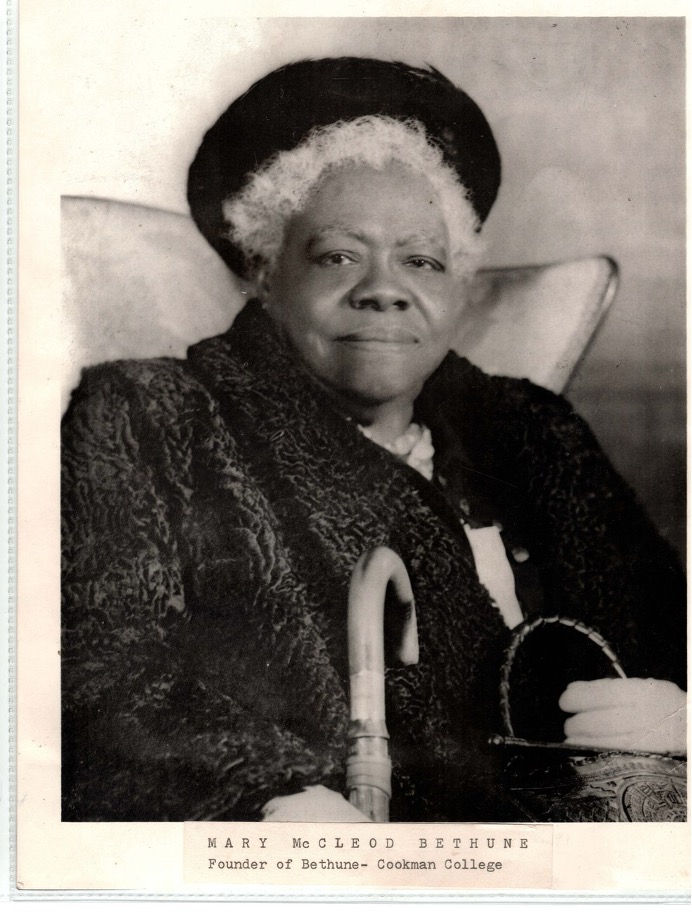
An archival portrait shows Dr. Mary McLeod Bethune seated with a curved cane in her later years. Photo: Courtesy of Bethune-Cookman University; confirm final photographer or archival credit.
The work behind the journey
Museum loans are built on work most visitors never see. Before the cane could travel, the curators examined the wood, photographed details and documented its condition. The artifact was supported with soft tissue and cushioning, wrapped against movement and placed in a protective container for transport.
The B-CU photographs turn that process into part of the story. They show preservation as a collaboration: the lending institution maintains the record and history of the object, while the borrowing museum prepares to present it safely and accurately to the public.
That behind-the-scenes care matters because an artifact is both evidence and responsibility. The cane can help a visitor understand Bethune's life only if institutions preserve its physical condition, document its provenance and provide the context that connects it to the person who used it.
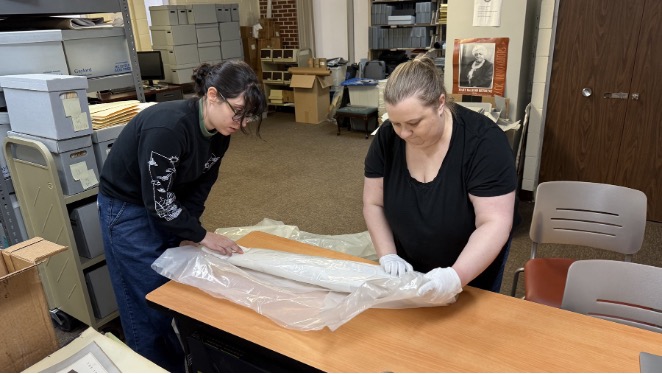
The curators place the cane in protective material before packing it for transport. Photo: Courtesy of Bethune-Cookman University; confirm final photographer or archival credit.
Stewardship that reaches beyond campus
B-CU's stewardship of Bethune's legacy extends across her campus home, the University's archival collections and the objects she left behind. The Mary McLeod Bethune Home preserves furnishings and personal items, while the University Archives houses her final papers and related collections for study.
Loaning the cane expands that work without separating the object from its institutional home. For a limited period, visitors in Chicago can encounter Bethune's story alongside the broader history of HBCUs and civil rights. When the exhibition closes, the artifact is expected to return to Daytona Beach and to the collection responsible for its long-term care.
The journey is fitting for a founder whose influence never stopped at the edge of campus. More than seven decades after her death, an object she once carried is carrying her story farther — and reminding a new audience that Bethune-Cookman University remains both a living university and a steward of American history.