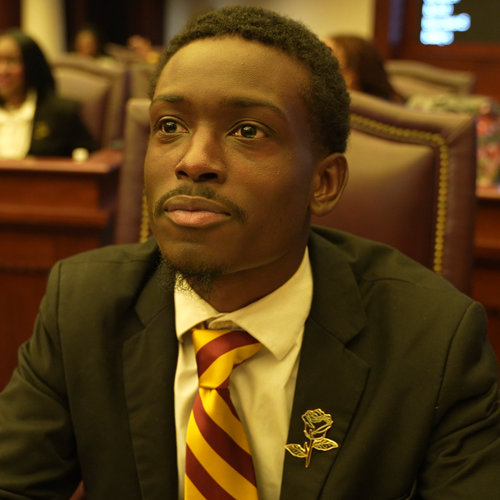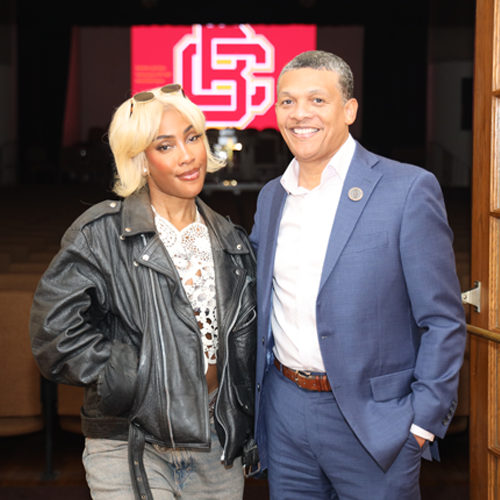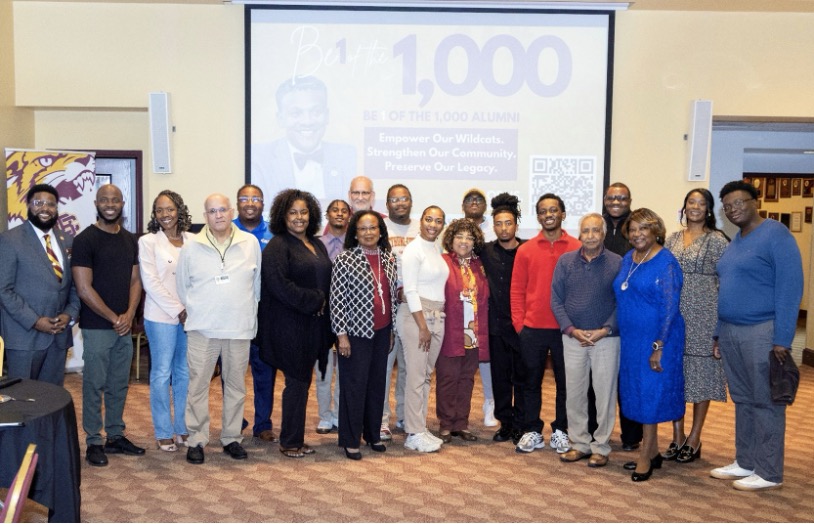
Alumni, faculty and students gather for the Department of Religion’s inaugural Alumni Council of Advisors meeting. Credit/rights: Courtesy of Bethune-Cookman University; recovered from an internal Gmail message.
DAYTONA BEACH, Fla. — Bethune-Cookman University’s Department of Religion has launched an Alumni Council of Advisors, creating a new avenue for graduates to help strengthen the program and support today’s students.
The inaugural gathering on Nov. 14 brought alumni, faculty and students together in person and online. The hybrid format allowed participants from beyond Daytona Beach to join a conversation centered on recruitment, student success, alumni engagement and the department’s long-term direction.
The council begins with a practical purpose: connect the experience of B-CU graduates with the needs and ambitions of current students. Alumni understand the program from the inside, and many have built careers in ministry, education, nonprofit leadership and community service. Their perspective can help students see how a religion degree translates into work that matters.
Council members discussed ways to increase awareness of the religion major and minor, strengthen mentoring relationships and create more consistent communication with graduates. They also considered how alumni can serve as ambassadors for a department grounded in faith, scholarship and service.
That combination is deeply connected to B-CU’s history. Dr. Mary McLeod Bethune treated faith as a source of courage and public responsibility. The new council gives alumni a structured role in carrying that legacy forward while helping the department respond to contemporary student needs.
For current students, an engaged alumni network can make the path beyond graduation more visible. A conversation with a pastor, chaplain, professor or nonprofit leader can connect classroom learning to professional practice. It can also create opportunities for internships, graduate study, service projects and career guidance.
For alumni, the council offers more than a ceremonial title. It creates a working relationship with faculty and students and a place to contribute ideas, contacts and time. The strongest advisory groups return regularly to specific questions, assign follow-up work and measure whether their recommendations are helping students.
The first meeting established that foundation. Participants represented multiple generations of the B-CU community, and the group photo captured the central idea behind the council: the department’s future will be shaped by people who value both its history and its potential.
Next steps include formalizing the council’s priorities, expanding alumni participation and identifying student-facing activities for the coming academic year. Those actions can turn a promising first meeting into an enduring network of support.
As the Department of Religion grows the council, its success will be visible in the relationships it creates — alumni returning to mentor, students discovering new possibilities and a program strengthened by the people it helped prepare to serve.
Advisory councils are most effective when they connect aspiration with specific action. Alumni can help review how the department presents its programs, suggest speakers and field experiences, and identify the questions graduates encounter when they move from academic study into professional and community settings.
The council can also help students understand the breadth of religious studies. The field develops close reading, ethical reasoning, historical analysis and communication — abilities useful in ministry as well as counseling, education, law, public service and nonprofit work. Alumni stories make those pathways concrete.
The hybrid inaugural meeting demonstrated how technology can widen participation. Graduates who could not return to Daytona Beach were still able to contribute, making it possible for the council to draw on a broader range of experiences while keeping a strong connection to campus.