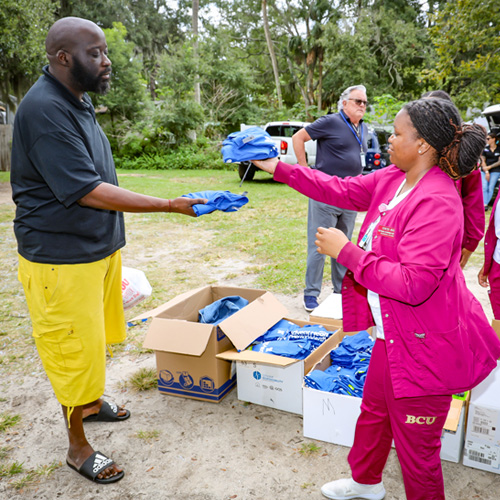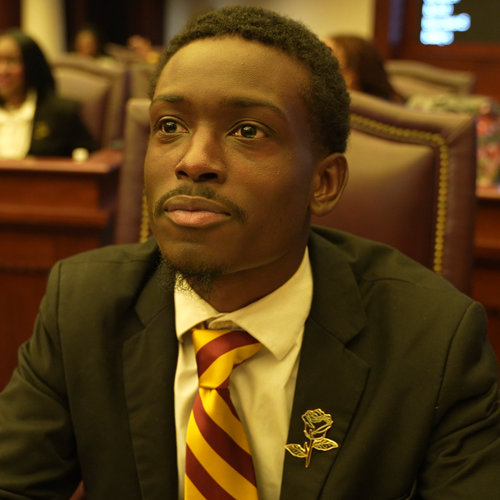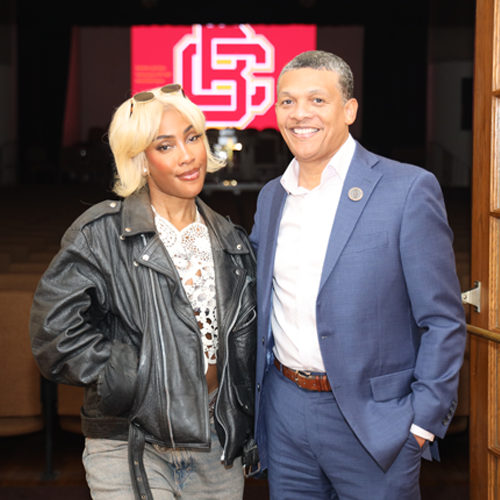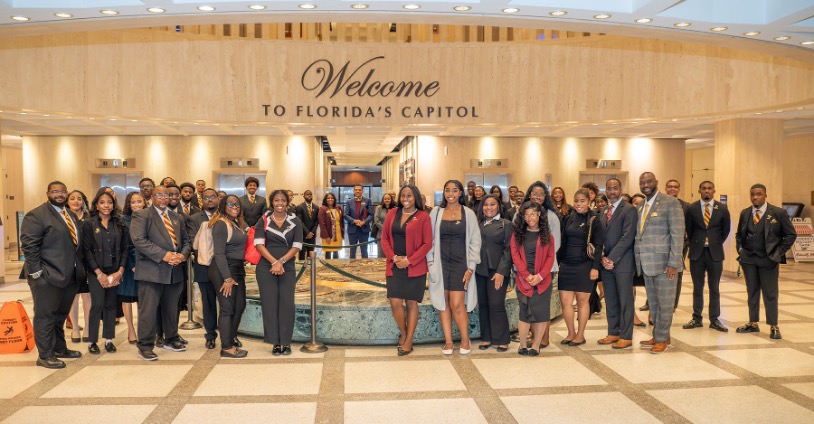
Bethune-Cookman students and University leaders gather inside the Florida Capitol during Wildcat Day at the Capitol. Credit/rights: Courtesy of Bethune-Cookman University.
TALLAHASSEE, Fla. — Bethune-Cookman University students carried the Wildcat spirit into the center of state government during Wildcat Day at the Capitol on December 9.
The visit combined civic learning, institutional advocacy and alumni engagement. Students from nursing, education, business and B-CU Futures joined University leaders for meetings, policy conversations, a luncheon and an evening reception with alumni and supporters.
Inside the Capitol, students saw how public policy moves from conversation to committee rooms and legislative chambers. They also had the chance to explain, in their own words, how B-CU programs prepare graduates for Florida’s workforce and strengthen communities across the state.
That student voice was central to the day. A nursing student can describe the realities of preparing for patient care. An education major can speak to the need for classroom-ready teachers. Business and B-CU Futures students can show how new academic pathways connect to industries shaping Florida’s economy.
The itinerary included a group photo, four sessions or meetings, a luncheon and an alumni meet-and-greet. Between scheduled events, students moved through the Capitol complex, visited the Senate chamber and met public officials and members of the Volusia County delegation.
For many participants, the visit provided a first close look at state government. The experience made the legislative process tangible: people, relationships and well-timed information influence decisions that affect higher education, financial aid, workforce development and local communities.
Wildcat Day also gave elected leaders a fuller view of Bethune-Cookman. B-CU is an institution with historic national significance, but its present-day contribution is equally important. Students train for careers in health care, education, technology, business, public service and the sciences, then carry those skills into communities throughout Florida and beyond.
The day concluded with alumni engagement, reinforcing that advocacy does not stop at graduation. Alumni can open doors, share professional expertise and help decision-makers understand the University’s continuing value.
The visit followed a tradition established by Dr. Mary McLeod Bethune, who understood that education and public policy are inseparable. She built coalitions, advised national leaders and made sure the needs of Black communities were represented where decisions were made.
By bringing students into that process, Wildcat Day at the Capitol did more than showcase B-CU. It helped prepare the next generation to participate confidently in civic life — ready to listen, speak, build relationships and advocate for the communities they serve.
Preparation mattered before every meeting. Effective advocacy asks participants to understand the audience, state a need clearly and support it with evidence. Students practiced turning their educational experiences into concise examples that could help leaders understand how public investment reaches classrooms, laboratories and communities.
The interdisciplinary group also showed that B-CU’s public impact cannot be reduced to a single program. Health care, teacher preparation, entrepreneurship and emerging career pathways respond to different needs, yet all depend on students having access to strong instruction, modern facilities and meaningful professional experiences.
After returning to campus, the value of the visit can continue through reflection and follow-up. Students can track issues discussed in Tallahassee, stay connected with the professionals they met and apply the same civic habits in student organizations, internships and their home communities.